
Automated QA & Sentiment Analysis
AI-Driven QA Coverage Across Customer Interactions, With Human Review Where Judgment Matters
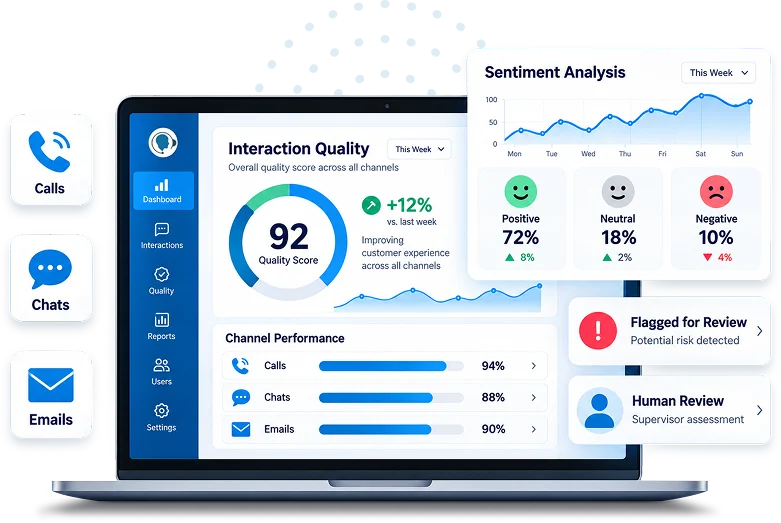
ExpertCallers combines automated interaction scoring with human QA review to extend quality monitoring beyond manual sampling and surface interactions that require closer attention. Calls, chats, and emails can be assessed against a QA rubric, while real-time sentiment analysis flags at-risk interactions for supervisor review. The workflow creates broader visibility into interaction quality, recurring issues, and coaching needs.
How Automated QA Works


Score Interactions Against Your QA Rubric
Every call, chat, and email is evaluated against a defined rubric based on your requirements for a good customer interaction.
The rubric can assess specific dimensions such as issue diagnosis, required disclosure language, resolution quality, and adherence to brand tone.

Analyze Sentiment in Real Time
Real-time agent assist capabilities can identify potential risk signals while an interaction is still live, where supported.
At-risk interactions can be flagged for supervisor review, giving the team an opportunity to intervene while the conversation is still in progress.

Escalate Interactions for Human Review
Automated analysis extends QA coverage across eligible interactions, while flagged cases are routed to human reviewers when context, judgment, or intervention is required.
Supervisors can review the interaction, assess the circumstances behind the score or sentiment signal, and determine the appropriate response. Automated scoring supports the review process, while decisions around coaching, escalation, and follow-up remain with the human team.

Identify Recurring Quality Issues
Interaction-level QA results can be analyzed to identify recurring patterns across agents, interaction types, quality dimensions, or workflows.
Repeated scoring gaps in areas such as issue diagnosis, disclosure adherence, resolution quality, or tone can indicate a broader coaching or process issue rather than an isolated interaction failure.
DMAIC-based root-cause analysis can then be applied to recurring findings to investigate what is driving the pattern and where coaching, process changes, or further review may be required.
Why Full QA Coverage Matters
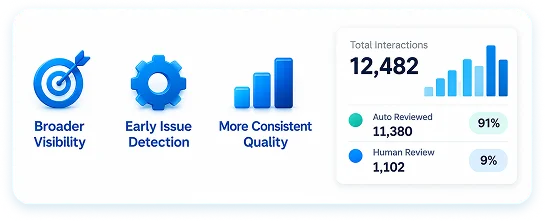
Manual QA sampling reviews only a small portion of customer interactions. Automated scoring can evaluate the broader interaction set against defined quality criteria, providing visibility that sample-based review cannot.
For organizations considering a contact center AI assistant, broader automated coverage can provide a more consistent way to identify recurring quality issues and quality drift across customer interactions.
A quality issue that recurs may go unnoticed when it falls outside the manual sample. With broader automated coverage, recurring quality drift can be identified earlier and routed into coaching or further analysis.
The shift is from periodic QA checks to continuous visibility into interaction quality.
What the QA Rubric Measures
A defined QA rubric breaks interaction quality into specific, checkable dimensions rather than relying on one overall score.
-

Issue Diagnosis
Was the customer's issue correctly understood and diagnosed?
-

Required Disclosures
Was the required disclosure language used where applicable?
-

Resolution Quality
Was the resolution appropriate to the customer's specific case?
-

Tone and Brand Alignment
Was the interaction consistent with defined communication and brand guidelines?
-

Coaching Opportunities
Which specific quality dimension requires improvement?
This structured approach gives team leads a clearer basis for coaching and creates an audit trail showing how interaction quality is being evaluated.
FAQ
Frequently Asked Questions
The workflow uses a QA rubric built around your defined interaction standards, enabling automated scoring against the criteria your team already uses for quality assessment.
Sentiment analysis can flag potential risk signals while an interaction is still live, where possible, allowing those interactions to be surfaced for supervisor review.
The workflow can evaluate calls, chats, and emails against defined QA criteria, providing a consistent framework for assessing interaction quality across channels.
Scores and identified patterns can be used to support coaching, investigate recurring issues, and apply root-cause analysis to broader quality or process concerns.
A QA Workflow Review can be used to examine your current interaction coverage, scoring approach, sentiment monitoring, escalation process, and recurring quality-analysis needs.