866-784-0925
  EMAIL
EMAIL  CHAT
CHAT 



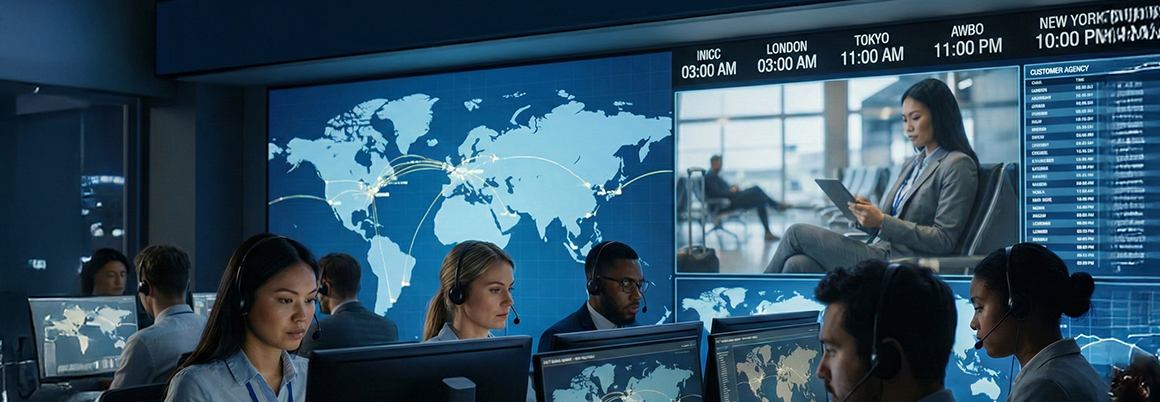
Introduction: Why 24/7 Customer Support Is Non-Negotiable for Travel Brands
Travel schedules are unpredictable. Whether it’s a guest checking in at midnight, someone changing a booking at 3 AM, or a client asking for assistance from halfway across the world, they all require immediate attention. Unfortunately, despite the expanding global market, most hotels and travel-related businesses only provide support during certain hours. This is a risk that most companies should learn to avoid. Let’s explore how 24/7 customer support for travel agencies can be a game-changer.
The Modern Guest’s Expectations
Today’s travelers interact with brands through mobile apps, chat platforms, social media, and OTAs, irrespective of the hours. They demand speed, clarity, and instant resolution. Let’s check what studies are saying.
According to HubSpot’s State of Service report, 67% of customers expect their support tickets to be resolved within three hours. In the same report, 78% of customers say that resolving their issue quickly is the most critical factor in a positive customer experience. 90% of customers consider an “immediate” response necessary when contacting customer service with questions; 60% define “immediate” as 10 minutes or less.
When a guest’s query is answered quickly, even at 2 AM, they feel valued. When it isn’t, negative reviews spread fast. 81% of customers say a positive customer service experience increases the likelihood of making another purchase.
The Cost of Being Unavailable
After-hours unavailability creates tangible business problems:
Lost Revenue: Most customers prefer brands that respond quickly or have live agents available. For example, 68% of respondents in a FFNews survey said they prefer live agent support to self-help when dealing with customer service.
Guest Frustration: Poor response times are among the top factors that drive customers away. For instance, over half of consumers say poor service led them to stop doing business with a brand — especially where response times were the issue.
Operational Disturbances: Day teams often get backlogged with issues from off-hours, which increases error rates and drains resources. Slow response times are a primary pain point in customer support workflows.
What Effective 24/7 Support Requires
Genuine round-the-clock support, on the other hand, should not be tied to automated responses only. It requires comprehensive service coverage that allows guests to book, modify, cancel, or request refunds at any hour without having to listen to an automated voice keeping them on hold. Moreover, the support must be omnichannel, accessible through phone, chat, email, and messaging apps like WhatsApp, so travelers can reach your business whenever needed.
Beyond reactive response, adequate 24/7 support has two critical foundations:
- Multilingual capability: Guests from different regions need support in their native language, not just English. These support facilities accommodate employees from various areas, making sure the experience is top-notch.
- Proactive problem-solving: The agents monitor check-in delays, flight disruptions, or booking issues and reach out before guests raise them. So, the travelers are assured of a safety net to fall on before they reach the destination.
None of these matters, however, without reliable infrastructure such as backup power, connectivity, and disaster recovery protocols that protect the travelers from any circumstance. Hence, hotels or restaurants must provide facilities that maintain customer satisfaction and long-term relationship continuity.
Technology as the Enabler
Integrating technology strategically often bridges the gap between guest expectations and operational delivery. For example, a hotel chain integrates its CRM, helpdesk platform, and mobile app. When a guest sends a late-night chat requesting a room upgrade, the system instantly shows the guest’s previous bookings and preferences. A chatbot can confirm availability immediately, but if the request requires human approval, it escalates to a live agent with all contexts preloaded. The guest receives a response within minutes while the operations team avoids manual data hunting or duplication.
Three core technologies make continuous support viable:
- Unified systems: Every customer support agent and help desk personnel can see a customer’s history.
- Smart automation: Agents handle more complex issues needing emotional intelligence and balance are transferred to human agents, while chatbots handle routine queries like booking confirmations.
- Real-time analytics: Knowledge of response times, ticket counts, and guest sentiment triggers managers’ need to adjust staffing and operational processes for the assigned ticket.
The key is integration. These technologies must work together seamlessly, not as disconnected tools that create more work for agents.
Measurable Business Impact
Loyalty develops when customers experience assistance during flight cancellations at midnight, disputes at check-in, and urgent room changes. These situations can be stressful, but the impression they leave on customers can help the business indirectly. Customers will remember these moments and recommend the company to other people.
Safeguarding reputation may falter when late-night bookings from business travelers and international customers are captured during the day. These are not marginal gains. Competitors without 24/7 operations will consider these as missed opportunities. Enhanced reputation happens because rapid response times lead to higher customer satisfaction. This limits the number of complaints on social media and OTA. Your reputation will improve as your customers see consistent policies handling disruptions across all time zones.
The Outsourcing Advantage
Straining your internal operations happens because of the unexpected ways to support 24/7 coverage. This is because of the challenges of organizing all three shifts for night coverage. However, unforeseen challenges can be mitigated through strategic outsourcing.
Partnering with Expert Callers will benefit you from trained, multilingual customer support without the burden of internal shift management.

This is especially true for busy seasonal times or when serving people across different time zones. As customers’ demands change rapidly, infrastructure expenses drop, and performance-driven SLAs and ongoing quality evaluations provide certainty and accountability. You avoid capital outlay on redundant systems or backup facilities, as well as the administrative burden of 24/7 staffing, while enjoying the full-service availability.
Conclusion
To say you are available is the bare minimum in the travel industry. Your customers live in a reality devoid of business hours and time zones, because their needs arise all the time. And so should your assistance. Expert Callers, with proven expertise, offers 24/7 helpdesk outsourcing, multilingual support, and AI-powered guest management – without the stress of managing internal shifts or infrastructure. Our skilled team ensures that your guests, whether over voice, chat, or other digital channels, are informed throughout.
FAQ
2. How does an AI-powered helpdesk improve hotel guest experience?
AI-powered help desks automate the answering of routine queries. When a guest needs help, AI helps human agents focus on the more valuable aspects of the interaction that require empathy.
3. What are the benefits of outsourcing hotel helpdesk services?
From a cost perspective, professional support at all hours is more affordable when helpdesk services are outsourced. There is also no need to maintain internal night shifts. Outsourcing also provides scalable support, in several languages, and at all times.
4. Can virtual receptionists effectively handle guest queries?
Virtual receptionists can accurately and consistently handle guest queries related to booking, questions, and escalations. This is achieved through CRM integration and expansive workflows.
5. How does digital transformation impact hospitality customer service?
With digital transformation, hospitality services experience a higher level of integration. There is automation of workflows, and real-time insight capturing guest interactions, which in turn drives response time and level of service.
6. What technologies are shaping the future of hotel guest support?
AI chatbots, helpdesk platforms with multiple customer engagement options, CRM-integrated analytics, and voice assistance are redefining support and service.
7. How can hotels maintain a human touch with AI support systems?
Self-service technologies are used to gain speed, while human agents still provide empathy and emotional support through seamless transitions and personalized closure to complex situations where soft skills are needed.
8. What challenges do hotels face with 24/7 guest assistance?
Missed bookings and poor reviews compound lost revenue and inconsistent service, resulting in increased brand reputation erosion and decreased guest loyalty.
9. How does 24/7 support build guest loyalty and retention?
24/7 availability instills trust and heightened satisfaction in pivotal moments, facilitating seamless service to frictionless repeat bookings.
10. What are the best practices for AI in hotel helpdesk services?
We initiate integrated data systems, establish clear escalation paths, train the models on hospitality-specific use cases, and provide human supervision to track performance.
 Prev
Prev